What is Kona Coffee?
Why Hawaii's Legendary Coffee Is So Rare & Expensive
What is Kona Coffee?
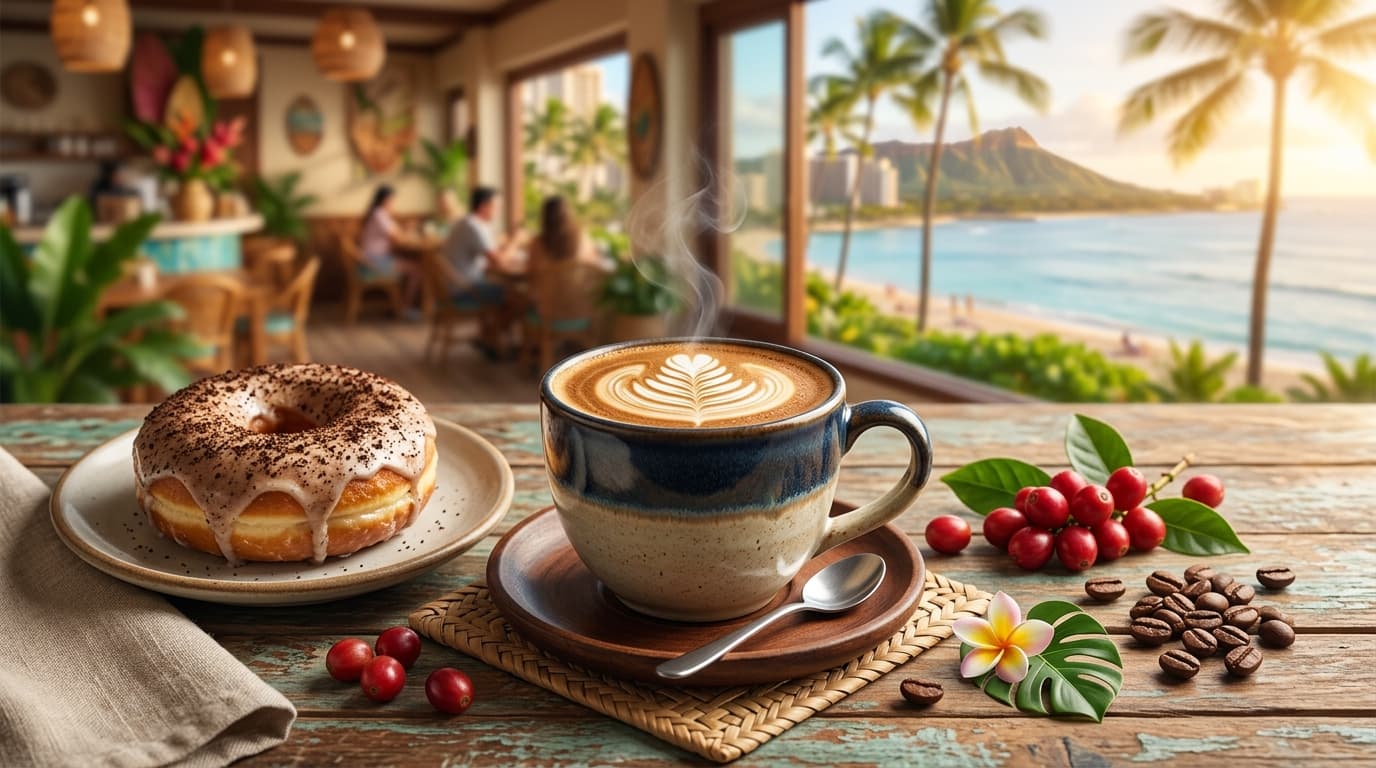
Kona coffee is premium arabica coffee grown only in the small Kona districts on the western slopes of Hualālai and Mauna Loa on Hawaii's Big Island. The rich volcanic soil, gentle morning sun, afternoon cloud cover, and warm island rain create a one-of-a-kind microclimate that yields a smooth, bright, low-acid cup with notes of nuts and brown sugar. By law, only beans grown in this tiny region can be called "Kona" — which is exactly why true Kona coffee is so rare and so prized.
The History of Kona Coffee
From a Single Cutting in 1828 to a Protected World-Class Origin
Coffee first arrived in Hawaii around 1828, when the missionary Samuel Ruggles brought coffee cuttings to the Kona district on the Big Island. The plants thrived in the volcanic soil and unique mountain climate, and what began as a small experiment slowly grew into one of the most respected coffee origins in the world.
The coffee flourished along a narrow strip of land now known as the "Kona Coffee Belt" — roughly 20 to 30 miles long on the slopes of Hualālai and Mauna Loa. This belt sits at the perfect elevation, where sunny mornings, cloudy afternoons, and steady rainfall give the cherries a long, even ripening that builds Kona's signature smooth flavor.
For generations, Kona has been farmed on small family farms — many founded by Japanese immigrants in the early 1900s — where ripe cherries are still hand-picked one by one. These families survived global coffee market crashes and labor shortages, holding onto their land and their craft when larger plantations elsewhere turned to machines.
Today, Kona coffee is a globally protected premium origin. Hawaii law strictly controls which beans may use the Kona name, and 100% Kona commands some of the highest prices of any coffee on earth. It has become a symbol of Hawaiian craftsmanship — a rare, single-origin coffee that drinkers seek out by name.
100% Kona vs Kona Blend vs Regular Coffee
What Are You Really Buying?
Not all "Kona" coffee is created equal. The label can be misleading, so here is exactly how 100% Kona, Kona Blend, and ordinary coffee compare:
| Feature | 100% Kona Coffee | Kona Blend (10%) | Regular Coffee |
|---|---|---|---|
| Origin | Kona district, Big Island | Mostly cheaper beans + 10% Kona | Anywhere in the world |
| Kona Content | 100% | As low as 10% | 0% |
| Harvest | Hand-picked, cherry by cherry | Mixed sources | Often machine-harvested |
| Flavor | Smooth, bright, low-acid, nutty | Diluted, inconsistent | Varies widely |
| Price | Premium | Mid-range | Low |
| Label Honesty | Protected origin name | Watch the fine print | n/a |
Beware the "Kona Blend" label — by Hawaii law it can legally contain as little as 10% real Kona coffee, with the other 90% being far cheaper beans from elsewhere. If you want the true Kona experience, always insist on 100% Kona.
Types & Grades of Kona Coffee
From Top Bean Grades to Your Cup in Waikiki
Extra Fancy
Top Grade
The highest grade of Kona coffee — the largest beans with the fewest defects. Extra Fancy beans are carefully sorted by size and quality, producing the cleanest, most refined cup. This is the grade serious coffee lovers seek out, and it commands the highest prices.
Fancy
Premium Grade
Just below Extra Fancy, Fancy grade features slightly smaller beans but the same beautiful Kona flavor profile. It offers excellent quality at a slightly more approachable price — a favorite for everyday premium brewing.
Kona Peaberry
Peaberry
A natural rarity. Normally a coffee cherry holds two flat-sided beans, but in about 5% of the crop a single round bean forms instead — the peaberry. Many roasters believe peaberries deliver a sweeter, more intense flavor, making them especially prized.
Estate / Single-Origin
Single-Origin
Coffee grown, harvested, and processed on a single Kona farm, fully traceable from tree to cup. Estate Kona lets you taste the character of one specific piece of volcanic land — the purest expression of what makes Kona coffee special.
In the Cup: Pour-Over, Latte & Affogato
In the Cup
How most visitors experience Kona — freshly brewed. A clean Kona pour-over showcases its smooth, low-acid character; a Kona latte rounds it with milk; and a Kona affogato pours hot espresso over ice cream for a Hawaiian treat. Try all three on our Kona coffee menu.
Why Kona Coffee Is So Special
Volcanic Soil & Perfect Microclimate
Kona's coffee grows in mineral-rich volcanic soil on the slopes of Hualālai and Mauna Loa. Sunny mornings, cloudy afternoons that shade the trees, and gentle island rain create an ideal microclimate found almost nowhere else — the foundation of Kona's smooth, balanced flavor.
The Only Coffee of Its Kind Grown in the USA
Hawaii is the only U.S. state that can commercially grow coffee, and Kona is its most famous region. That makes 100% Kona a genuinely American specialty coffee — grown, hand-picked, and roasted on home soil rather than imported, which adds to both its appeal and its price.
Hand-Picked, Small-Farm Quality
Most Kona comes from small family farms where ripe cherries are still picked by hand, one at a time, over a months-long harvest. This careful, labor-intensive work is expensive — but it is exactly why every cup of true Kona tastes so clean and consistent.
Limited Supply = Rarity & Price
The Kona Coffee Belt is tiny, so only a small amount of true Kona is produced each year. When demand far outstrips a fixed, limited supply, prices rise. That rarity is the core reason 100% Kona is one of the most expensive coffees in the world.
Where to Drink Kona Coffee in Waikiki
If you're craving real Hawaiian Kona coffee in Waikiki, Kona Coffee Donut is your destination.
Kona Coffee Donut
2142 Kalakaua Ave, Honolulu, HI 96815
Located in the heart of Waikiki on Kalākaua Avenue, Kona Coffee Donut serves real Hawaiian Kona coffee — we proudly pour Honolulu Coffee — alongside fresh donuts and Korean bingsu. Enjoy it as a smooth pour-over, a creamy latte, or a Kona affogato, all just steps from the beach.
- Real Hawaiian Kona coffee, brewed fresh daily
- Served as pour-over, latte, or Kona affogato
- Walking distance from Waikiki Beach
- Open daily — fresh donuts and bingsu too
How to Enjoy Kona Coffee
Get the Most Out of Every Cup
Taste It Black First
Before adding milk or sugar, take a sip of Kona black — ideally as a pour-over. Its low acidity and smooth, nutty sweetness shine on their own. Tasting it black is the best way to appreciate what makes real Kona coffee worth the price.
Insist on 100% Kona
Always check the label. "Kona Blend" can be as little as 10% Kona, so look for the words "100% Kona" to be sure you're getting the real thing. When in doubt, ask — a good cafe will be proud to tell you exactly what they pour.
Try It as an Affogato or Latte
Kona's smooth profile makes it a beautiful base for espresso drinks. A Kona latte is creamy and balanced, while a Kona affogato — hot espresso poured over cold ice cream — turns your coffee into a refreshing Hawaiian dessert. Both are perfect for a warm Waikiki afternoon.
Pair It with a Malasada or Mochi Donut
Kona's nutty, low-acid flavor pairs perfectly with something sweet. A warm malasada or a chewy mochi donut balances the coffee beautifully — the classic Hawaiian way to enjoy a cup of Kona with friends.
Frequently Asked Questions About Kona Coffee
What makes Kona coffee special?
Why is Kona coffee so expensive?
What is the difference between 100% Kona and Kona Blend?
What does Kona coffee taste like?
Where can I drink real Kona coffee in Waikiki?
Taste Real Kona Coffee in Waikiki
Visit Kona Coffee Donut at 2142 Kalakaua Ave and taste authentic Hawaiian Kona coffee, poured fresh alongside our donuts and bingsu.