Updated April 2026
Malasada vs Mochi Donut
The Ultimate Hawaiian Donut Showdown
Quick Answer
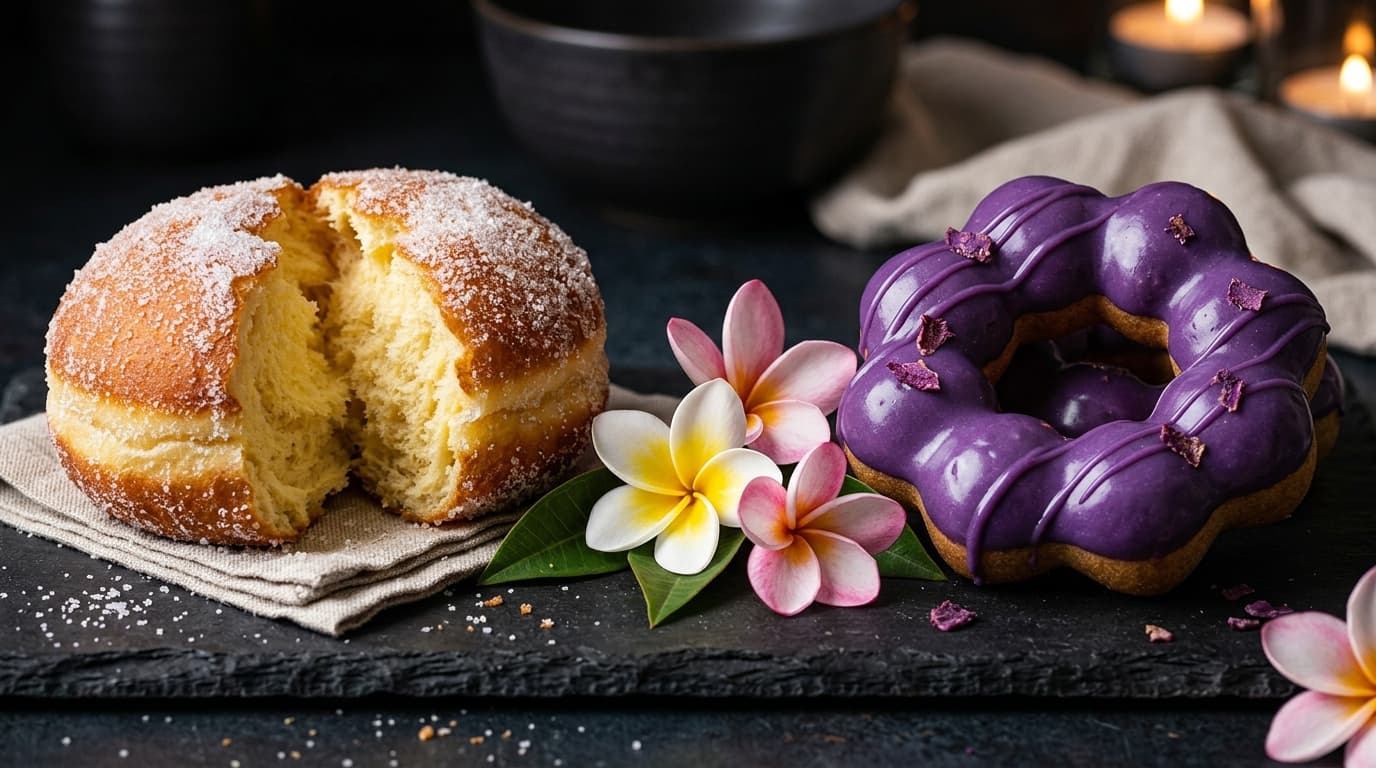
Malasadas are Portuguese fried dough — fluffy, sugar-coated, and sometimes filled with cream, custard, or haupia. Mochi donuts use rice flour (mochiko) for a crispy-chewy QQ texture with colorful glazes. Both are beloved Hawaiian treats, and at Kona Coffee Donut in Waikiki you can try them side by side.
Head-to-Head Comparison
| Category | Malasada | Mochi Donut |
|---|---|---|
| Origin | Portugal via Hawaii (1800s) | Japan / Korea fusion (2020s) |
| Flour | Wheat flour | Mochiko rice flour |
| Texture | Fluffy, airy, pillowy | Crispy outside, chewy inside (QQ) |
| Shape | Round ball | 8-ball ring |
| Coating | Sugar rolled | Glaze dipped |
| Filling | Cream, custard, haupia | Usually none |
| Best for | Warm comfort food | Instagram-worthy snack |
| Price range | $3.95 – $5 | ~$3.75 each |
The Case for Malasadas
The malasada is more than a donut — it is a piece of Hawaiian history. Portuguese immigrants arrived in Hawaii in the late 1800s to work on sugar plantations, and they brought with them a tradition of deep-fried, sugar-rolled dough that would become one of the most iconic treats on the islands. The word "malasada" comes from the Portuguese for "under-cooked," a nod to the soft, almost molten center that makes this pastry so irresistible.
Leonard's Bakery, which opened on Oahu in 1952, popularized the malasada in modern Hawaii and remains a pilgrimage site for tourists and locals alike. But the beauty of the malasada lies in its simplicity: flour, eggs, butter, sugar, and yeast, fried until golden and rolled in granulated sugar while still warm. The result is a treat that practically melts in your mouth, with a slight crunch on the outside giving way to an impossibly light, pillowy interior.
Modern malasadas have evolved beyond the classic sugar-coated ball. At shops across Hawaii you will find them filled with haupia (coconut pudding), lilikoi (passion fruit) custard, Bavarian cream, and even ube. Eaten warm — ideally within minutes of leaving the fryer — a malasada is warm comfort in edible form. There is nothing quite like tearing into a just-fried malasada on a Waikiki morning, the sugar clinging to your fingers, the steam rising from the impossibly soft center.
The Case for Mochi Donuts
If the malasada represents old-world tradition, the mochi donut is the new wave. Born from a fusion of Japanese mochi culture and American donut innovation, mochi donuts use glutinous rice flour (mochiko) instead of wheat. The result is a texture unlike any other donut: crispy and slightly crackly on the outside, with a stretchy, chewy interior that fans describe as "QQ" — a term borrowed from Taiwanese food culture to describe that satisfying bounce.
The distinctive 8-ball shape — a ring of connected spheres — is not just for looks. Each ball is the perfect pull-apart bite, and the crevices between them catch pools of colorful glaze. Speaking of glaze: mochi donuts are a canvas for creativity. From classic flavors like original glaze and chocolate to adventurous options like ube (purple yam), matcha, black sesame, taro, and mango, there is a mochi donut for every palate.
MOCHILAND, our partner brand, has elevated the mochi donut into an art form with 12+ rotating flavors that change with the seasons. Each donut is handcrafted in small batches for maximum freshness. The viral social-media appeal is undeniable — these photogenic treats practically beg to be shared on Instagram — but the real magic is in the taste. Once you experience that crispy-chewy QQ texture, you understand why mochi donuts have gone from niche trend to must-try food phenomenon across Hawaii, the mainland, and beyond.
Why Not Both?
Here is the secret that only a place like Kona Coffee Donut can share: you do not have to choose. We are one of the only shops in Waikiki where you can order a warm malasada AND a freshly glazed mochi donut and enjoy them side by side. That is the whole point — these are two completely different donut experiences, and comparing them is half the fun.
We suggest what we call a "Donut Flight": pick one malasada (we recommend the classic sugar or the haupia-filled) and one mochi donut (try the ube or matcha for your first time). Pair them with a cup of our Honolulu Coffee, and you have the ultimate Waikiki tasting experience. The rich, smooth Hawaiian coffee cuts through the sweetness of both donuts beautifully, creating a pairing that is greater than the sum of its parts.
Whether you are a first-time visitor to Hawaii or a returning local, the malasada-versus-mochi-donut debate is one you can settle for yourself at our shop. Grab a friend, order both, and discover which side you land on — or, like most of our customers, decide that both deserve a permanent spot in your life.
The Verdict
There is no wrong choice. The fluffy warmth of a malasada speaks to the soul, while the QQ crunch of a mochi donut delights the senses. But the REAL move? Try both side by side with a cup of Kona coffee at our Waikiki shop. That is the kind of comparison you can only make in person — and the kind of morning that makes a Hawaii vacation unforgettable.
Frequently Asked Questions
What is the difference between a malasada and a mochi donut?
Where can I get both malasadas and mochi donuts in Waikiki?
What does QQ texture mean?
Which is more popular in Hawaii — malasadas or mochi donuts?
Settle the Debate Yourself
Visit Kona Coffee Donut at 2142 Kalakaua Ave, Waikiki. Try both and decide which Hawaiian donut wins YOUR heart.