What Is Ube? The Purple Yam Explained (and Where to Taste It in Waikiki)
Not taro. Not sweet potato. Ube is a Filipino purple yam with a mellow vanilla-coconut flavor — and in Hawaii it is on everything from donuts to lattes.
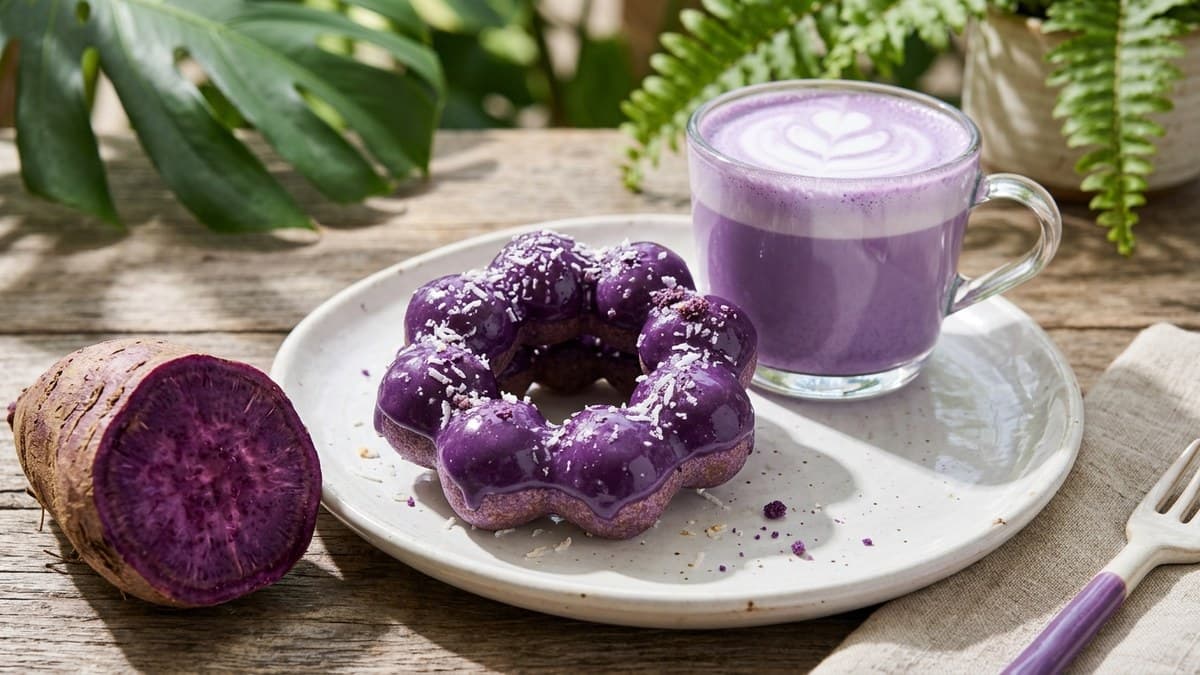
Ube (pronounced OO-beh) is a purple yam native to the Philippines, prized for its naturally violet flesh and a soft, nutty sweetness that tastes somewhere between vanilla, coconut and pistachio. If you have spent more than a day in Hawaii you have already seen it: purple ice cream, purple pancakes, purple donuts, purple lattes. Ube arrived with the islands' large Filipino community and never left. It is also the single most-asked-about word at our counter on Kalākaua — usually phrased as "is that taro?" (it isn't). This guide answers what ube actually is, how it differs from taro and purple sweet potato, what it tastes like, why Hawaii loves it, and exactly which ube items you can try at Kona Coffee Donut in Waikiki.
Taste Ube Five Ways in Waikiki
Ube mochi donut, ube malasada, ube milk bingsu, ube latte and canned ube boba — all at Kona Coffee Donut, 2142 Kalākaua Ave, about 5 minutes from Waikiki Beach. Open 7 AM to 9 PM daily, walk-in only.
What is ube? (The 40-word answer)
Ube is a purple yam (Dioscorea alata) native to the Philippines. Its flesh is naturally deep violet, and when cooked it has a mellow, nutty sweetness often compared to vanilla, coconut and pistachio. It is a yam, not taro and not a purple sweet potato.
Ube vs taro vs purple sweet potato
These three get mixed up constantly because they are all starchy roots and all show up in Asian desserts. They are different plants with different flavors:
- •Ube — a yam. Naturally vivid purple all the way through. Sweet, nutty, vanilla-coconut flavor. Used almost entirely for desserts.
- •Taro — a corm from the taro plant (kalo in Hawaiian). Pale white or lavender-grey flesh with tiny purple flecks. Mild, earthy, more starchy than sweet. Poi is made from taro, and our Taro mochi donut is a distinctly different (gentler, less sweet) flavor from Ube.
- •Purple sweet potato — Okinawan sweet potato, common in Hawaii plate lunches. Purple flesh but a classic sweet-potato taste; drier, more savory, less floral than ube.
What does ube taste like?
Mild and sweet, with a nutty, almost floral finish. Most people land on the same three comparisons: vanilla for the roundness, coconut for the creamy sweetness, and pistachio for the nutty undertone. It is never sharp or bitter, which is why it pairs so well with milk — ube latte, ube milk tea and ube bingsu all work because dairy amplifies that soft flavor. The color is the other half of the experience: real ube is naturally purple, no dye required, and the shade deepens as it cooks.
Why Hawaii loves ube
Filipinos are one of the largest ethnic groups in Hawaii, and ube came over with the food culture — ube halaya at family parties, ube in halo-halo, ube ice cream at neighborhood shops. Over the last decade it crossed over into mainstream island dessert menus, and now purple is simply part of the Hawaii sweets palette alongside coconut, lilikoi and Kona coffee. For visitors it has become a must-taste: an Instagram-native color and a flavor most mainland travelers have never had. Hawaii is one of the easiest places in the United States to eat ube in a dozen forms within a few blocks.
Ube at Kona Coffee Donut in Waikiki
Ube is our most popular flavor family, and you can taste it as a donut, a filled pastry, a shaved-milk dessert, a coffee drink or a boba — all at 2142 Kalākaua Ave, made in-house every morning. The current ube lineup:
- •Ube mochi donut — $3.95. Chewy tapioca-rice mochi ring with a lavender ube glaze; the signature. Mix any flavors: 3 for $11.25, 6 for $22.50, dozen $45.
- •Ube malasada — $3.95. Hawaii-style fried yeast dough, rolled in sugar, ube-flavored.
- •Ube Cream filled malasada — $4.95. Same malasada, piped full of ube cream. The richest bite on the counter.
- •Ube milk bingsu — $15.95. Korean shaved-milk snow with ube sauce and toppings; built for two people to share.
- •Ube Latte — $7.95, hot or iced. Espresso over ube milk; sweet, nutty, purple-and-tan layers.
- •Ube boba milk tea (can) — $8.95. Sealed can-style cup with brown-sugar pearls, grab-and-go for the beach.
Which ube item should you order first?
Depends on what you want out of it:
- •Tasting ube for the first time → Ube mochi donut. Cleanest expression of the flavor, $3.95, and you can pair it with Taro to taste the difference side by side.
- •Want a drink to walk with → Ube Latte iced. Coffee plus ube is the combination visitors photograph most.
- •Two people, afternoon heat → Ube milk bingsu. One bowl, two spoons, 15 minutes in the shade.
- •Heading to the beach → Ube boba can. Sealed, travels, no spill.
- •Comparing flavors → a 3-pack: Ube, Taro, Black Sesame. That trio explains the whole Asian-dessert spectrum in one box.
Keep Reading
Frequently Asked Questions
Come Taste the Purple
Ube mochi donuts, malasadas, bingsu, lattes and boba at 2142 Kalākaua Ave. Open 7 AM – 9 PM daily, 5 minutes from the beach.