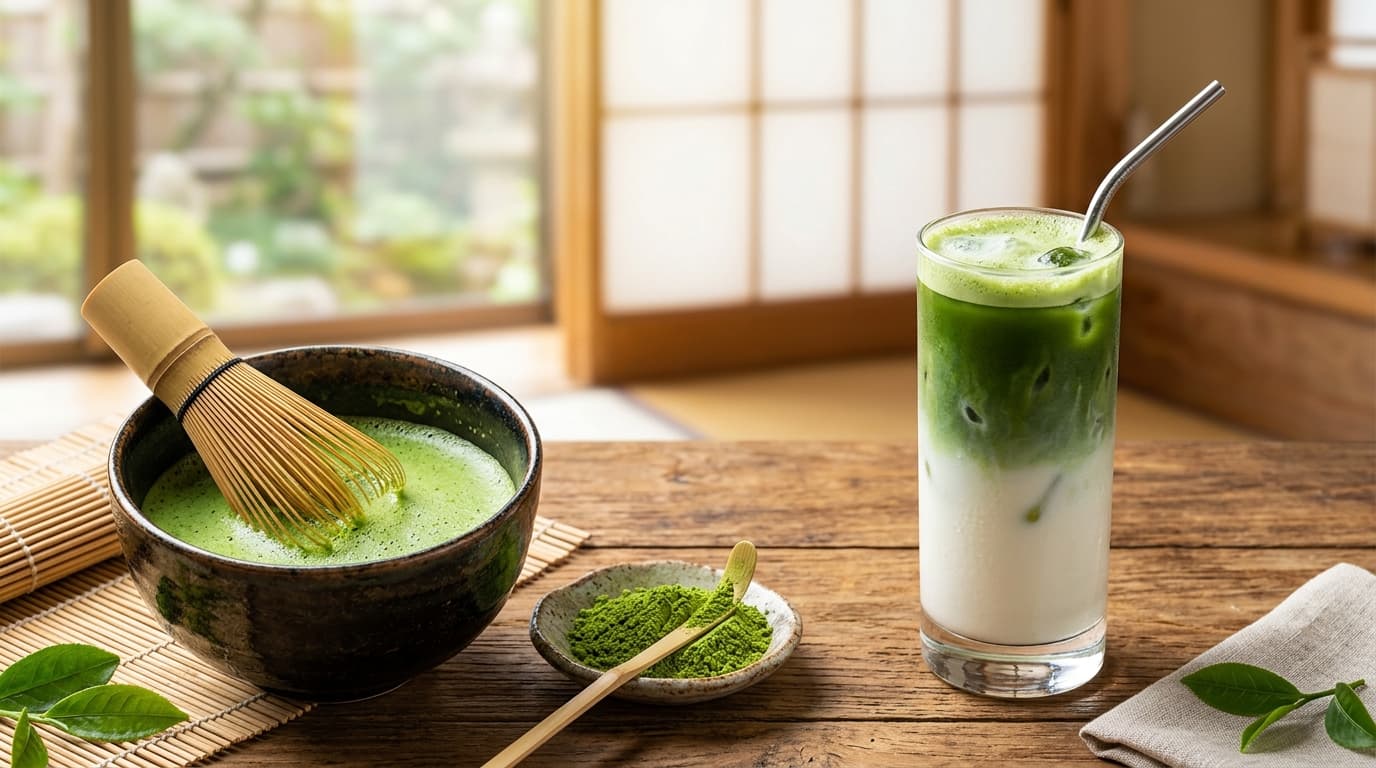
The Story of Matcha
From the Japanese Tea Ceremony to Your Waikiki Cup (2026)
What Is Matcha?
Matcha is finely ground powder made from shade-grown green tea leaves (a type called tencha) that are stone-milled into a bright, vivid green powder. Unlike regular tea, where you steep leaves and throw them away, with matcha you whisk the whole leaf into water and drink it all — so you take in far more of its antioxidants, its umami-rich flavor, and its caffeine. The taste is grassy and vegetal with a natural, savory sweetness. Because it pairs caffeine with the calming amino acid L-theanine, matcha gives a smooth, "calm alert" energy without the jitters or crash of coffee — and Waikiki is a wonderful place to taste a real, freshly whisked cup.
The Story of Matcha
From Zen Temples and the Tea Ceremony to a Cup by the Beach
Matcha's story begins with powdered tea in ancient China, but it found its true home in Japan. In 1191, the Zen monk Eisai is said to have carried tea seeds and the method of preparing powdered green tea back from China. In Zen monasteries, monks drank whisked tea to stay calm yet alert during long hours of meditation — the very same balance people love in matcha today.
Over the centuries, sharing a bowl of matcha grew into chanoyu, the Japanese tea ceremony — an art of hospitality, mindfulness, and quiet attention to detail. In the 16th century, the tea master Sen no Rikyū shaped the ceremony around simplicity and presence, ideals still honored today. Each bowl is whisked to order with a bamboo whisk called a chasen and served in a wide tea bowl, the chawan — turning a simple drink into a moment of calm.
The flavor comes from the way the leaves are grown. For a few weeks before harvest, the tea plants are covered in shade. Starved of direct sun, the leaves produce more chlorophyll (that vivid green) and more L-theanine and umami. Only the softest leaves are picked, steamed, dried, and de-veined into tencha, then slowly stone-ground into an ultra-fine powder. A single stone mill may produce only about 30–40 grams of matcha in an hour — which is part of why great matcha is treasured.
That long journey — from Zen temples to the tea ceremony to a shop on Kalākaua Avenue — is what you're tasting in a modern matcha latte. Whisked fresh and poured over milk and ice, matcha has become a beloved coffee alternative around the world. And in Waikiki, you can enjoy that centuries-old craft in the most relaxed setting imaginable: a bright, freshly whisked cup, minutes from the beach, next to a warm mochi donut.
Ceremonial vs. Culinary Grade Matcha
Not All Green Powder Is the Same
Matcha is sold in different grades depending on how the leaves are grown and ground. Here's a simple guide to what separates true ceremonial matcha from culinary grade — and from the "matcha-flavored" powders that aren't really matcha at all:
| What to look for | Ceremonial grade | Culinary grade | "Matcha flavored" |
|---|---|---|---|
| Leaves used | Youngest shade-grown tencha leaves | Later-harvest green tea leaves | Green tea dust, sugar & coloring |
| Color | Vivid, bright jade green | Duller, more olive green | Artificially bright or faded |
| Flavor | Smooth, umami, naturally sweet | Bolder, slightly bitter | Sweet, flat, no real tea depth |
| Best for | Whisked on its own or in lattes | Lattes, baking, smoothies | Not much — mostly sugar |
| Texture | Silky, ultra-fine, stone-ground | Fine but slightly coarser | Powdery, often clumpy |
| Verdict | The real thing | Great in a latte | Skip it |
The one rule that matters most: real matcha is made from tencha green tea leaves, not "matcha flavoring." A great matcha latte can use either ceremonial or good culinary grade — what you want to avoid is a sweet powder with no genuine tea in it. When it's whisked fresh from real matcha, you can taste the difference immediately.
The Story in Every Cup
Five Things That Make Matcha Special
Shade-Grown Leaves
Tencha, grown in shade
For weeks before harvest, the tea plants are covered to block the sun. This boosts chlorophyll and L-theanine, giving matcha its vivid green color and smooth, umami-rich taste. It's the first secret behind why real matcha tastes so different from ordinary green tea.
Stone-Ground Powder
Slowly milled by stone
The finest leaves are dried into tencha, then ground between granite stones so slowly that one mill makes just a few grams an hour. The result is an ultra-fine powder that dissolves into a silky, whisked cup — no straining, no leaves left behind.
The Whisk & Bowl
Chasen & chawan
Traditionally, matcha is whisked with a bamboo whisk (a chasen) in a wide bowl (a chawan) until it turns frothy and smooth. That simple ritual comes straight from the tea ceremony — a moment of calm attention in every cup.
Umami Flavor
Grassy, sweet, savory
Great matcha tastes grassy and vegetal with a natural, savory sweetness called umami — never harshly bitter. Milk and a touch of sweetness round it out in a latte, while the earthy green depth still shines through underneath.
Calm-Alert Energy
Caffeine + L-theanine
Matcha pairs caffeine with L-theanine, an amino acid that promotes calm focus. Together they give a smooth, steady "calm alert" energy — the same balance Zen monks valued for meditation, and a big reason matcha is loved as a gentler coffee alternative.
Why Matcha? The Benefits
Rich in Antioxidants
Because you drink the whole ground leaf, a cup of matcha delivers a concentrated dose of antioxidants — especially catechins like EGCG. You're getting far more of the leaf's beneficial compounds than you would from a steeped-and-discarded tea bag.
Calm, Steady Energy
Matcha's caffeine comes alongside L-theanine, an amino acid that encourages relaxed focus. The combination gives a smooth "calm alert" lift without the jittery spike and crash many people feel from coffee — clear energy that lasts.
A Gentler Coffee Alternative
If coffee leaves you wired or anxious, matcha is a wonderful switch. It has meaningful caffeine but delivers it gently, so it's a favorite for anyone who wants a lift that feels calm rather than intense. It's the reason so many coffee drinkers keep a matcha in rotation.
Endlessly Versatile
Matcha shines whisked on its own, poured into a creamy latte, blended into fruit flavors, or swapped for a roasted hojicha base. That flexibility — plus its beautiful green color — is why it has become one of the most beloved drinks in cafés around the world.
Where to Drink Real Matcha in Waikiki
Once you know the story, you'll want to taste it. For a freshly whisked cup near Waikiki Beach, Kona Coffee Donut? is a great place to start.
Kona Coffee Donut?
2142 Kalakaua Ave, Honolulu, HI 96815
Right on Kalākaua Avenue in the heart of Waikiki, Kona Coffee Donut? whisks a real Matcha Latte ($9.95) plus a full flavored-matcha lineup — strawberry, mango, coconut, guava, and banana — and you can even choose a roasted Hojicha base instead. Our Strawberry Matcha is far and away the crowd favorite: whisked green tea layered with sweet berry, it's the one guests keep coming back for. Pair any of them with a warm mochi donut, about a 5-minute walk from Waikiki Beach.
- Real Matcha Latte ($9.95), whisked fresh
- Flavored matcha: strawberry (our bestseller), mango, coconut, guava, banana
- Choose a roasted Hojicha base too
- Open daily, 7AM–9PM · (808) 260-1835
How to Enjoy Your Matcha
Simple Tips to Get the Most From Every Cup
Taste It Fresh
Matcha is at its best whisked and poured to order. Drink it soon after it's made, while the color is vivid and the flavor is bright — that's when the smooth, grassy sweetness really shines. A freshly made cup beats one that's been sitting every time.
Try the Classic First
Before diving into fruit flavors, try a plain Matcha Latte to get to know matcha's real character — the umami depth and gentle green sweetness. Once you know what real matcha tastes like, the flavored versions become even more fun.
Then Explore the Flavors
Feeling adventurous? Our Strawberry Matcha is the runaway favorite, but mango, coconut, guava, and banana are all worth a try. Or swap in a roasted Hojicha base for a nuttier, mellower cup — a lovely change of pace from the grassy green.
Pair It With a Mochi Donut
Matcha's earthy sweetness is a perfect match for a warm, chewy mochi donut. Order both, find a seat, and let a quick drink stop become a little Waikiki ritual — a modern echo of that centuries-old habit of pairing tea with something sweet.
Frequently Asked Questions About Matcha
What is matcha?
Is matcha healthier than coffee?
Does matcha have caffeine?
What is the difference between ceremonial and culinary grade matcha?
Where can I get real matcha in Waikiki?
Taste the Story of Matcha in Waikiki
Visit Kona Coffee Donut? at 2142 Kalakaua Ave and try a real matcha latte — whisked fresh and paired with a warm mochi donut, just minutes from Waikiki Beach.