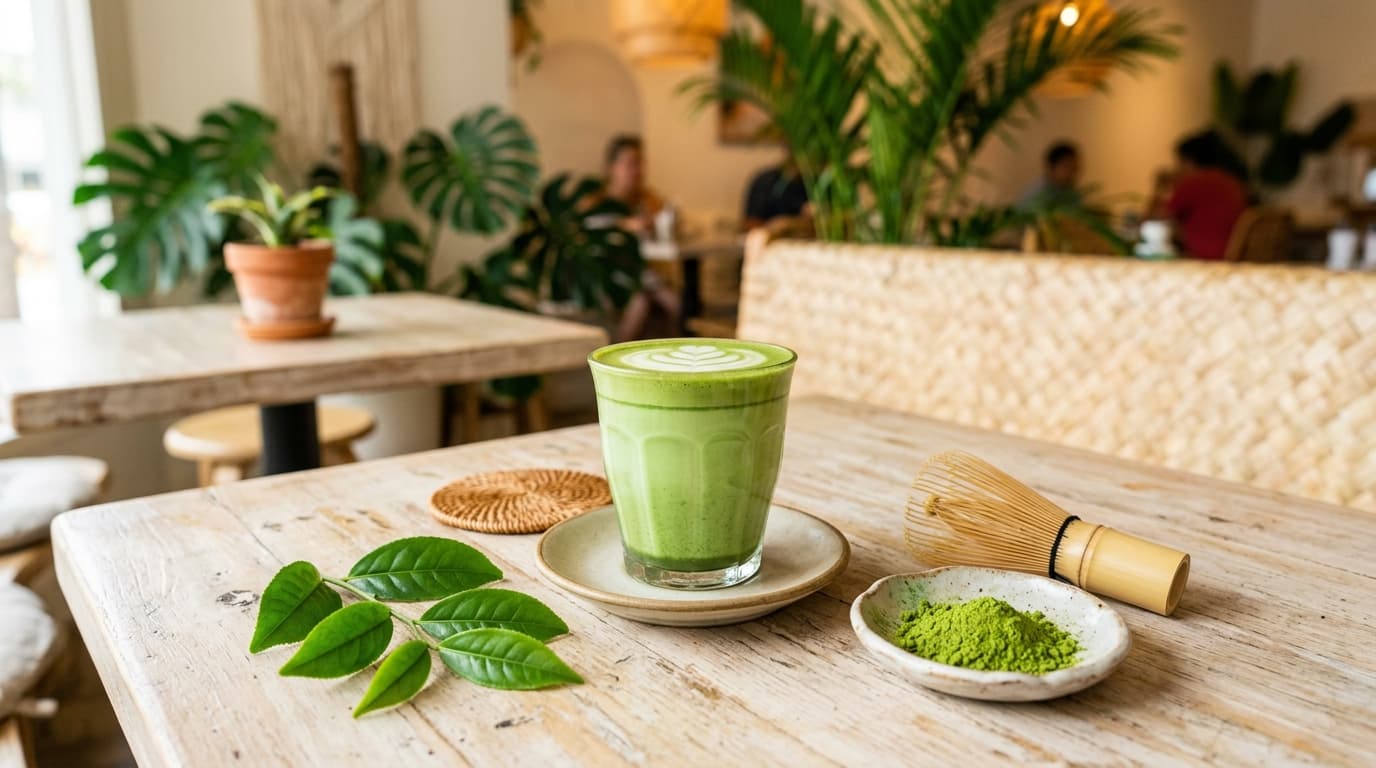
Matcha Benefits & Caffeine
Is Matcha Good for You? Health Benefits & Caffeine, Explained (2026)
Is Matcha Good for You?
Yes — for most people, matcha is a genuinely good-for-you drink. Because you whisk and drink the whole stone-ground green tea leaf, matcha is rich in antioxidants (catechins, especially EGCG) and pairs caffeine with L-theanine, an amino acid that may support calm, focused energy without the crash or jitters. A matcha latte has less caffeine than a cup of coffee (roughly 60–70 mg vs 95–120 mg), so it's an easy everyday upgrade. The best part? You can taste real, freshly whisked matcha in Waikiki — steps from the beach — paired with a warm mochi donut.
The Benefits of Matcha, Explained
What the Green Tea Leaf May Do for You
Matcha starts with shade-grown green tea leaves that are stone-ground into a fine powder — so when you whisk and drink it, you consume the whole leaf, not just an infusion. That's why matcha is famously rich in antioxidants, especially a group of catechins called EGCG (epigallocatechin gallate). Antioxidants help the body neutralize free radicals, and matcha delivers a concentrated dose in a single cup.
The most loved benefit is how matcha feels. It contains caffeine, but also L-theanine, an amino acid that may support a calm, relaxed alertness. Together they create what fans describe as calm, focused energy — a steady lift without the spike, crash, or jitters that a strong coffee can bring. It's energy you can settle into rather than ride out.
Matcha may also gently support your metabolism — the catechins in green tea have been studied for a small supportive role — and its antioxidants are why matcha is often mentioned for skin: antioxidant-rich foods and drinks may help support healthy-looking skin as part of an overall balanced diet. As always, matcha is a wholesome drink, not a medicine, and these are supportive, everyday benefits rather than cures.
Add it all up and matcha gives you smooth, sustained energy that's easy to enjoy morning, noon, or afternoon. The simplest way to feel the difference is to drink the real thing — freshly stone-ground matcha whisked to order, not a sugary pre-mix. In Waikiki, you can do exactly that at Kona Coffee Donut?, and pair your cup with a chewy mochi donut for the perfect island treat.
How Much Caffeine Is in Matcha?
Matcha vs Coffee vs Energy Drink
A typical matcha latte has around 60–70 mg of caffeine — noticeably less than a standard coffee. But the numbers only tell part of the story; how the caffeine feels matters just as much. Here's how matcha stacks up:
| What you're comparing | Matcha Latte | Brewed Coffee | Energy Drink |
|---|---|---|---|
| Typical caffeine | ~60–70 mg per latte | ~95–120 mg per cup | ~150–300 mg+ |
| How it feels | Calm, focused, steady | Quick, strong lift | Intense, sometimes wired |
| The crash | Gentle — L-theanine smooths it | Possible mid-day dip | Common hard crash |
| Jitters | Rare, smooth energy | Possible for sensitive folks | Common |
| Extras in the cup | Antioxidants + L-theanine | Antioxidants | Added sugar & stimulants |
| Best for | Smooth all-day energy | A stronger morning kick | Occasional use at best |
The takeaway: matcha gives you real, functional caffeine — just less of it, and paired with L-theanine for a calmer, jitter-free lift. If coffee sometimes leaves you wired, matcha is the easy swap. Want even less caffeine? Ask for our hojicha, a roasted green tea that's naturally lower in caffeine.
Matcha Benefits at a Glance
Five Reasons People Reach for Matcha
Rich in Antioxidants
Catechins & EGCG
Because you drink the whole stone-ground leaf, matcha is packed with catechins — especially EGCG. Antioxidants help the body neutralize free radicals, and matcha delivers a concentrated dose in every whisked cup.
Calm, Focused Energy
L-theanine + caffeine
Matcha's signature benefit. The amino acid L-theanine works alongside caffeine to support a relaxed, focused alertness — the smooth "calm energy" matcha is loved for, without the buzz of a strong espresso.
May Support Metabolism
Green tea catechins
The catechins in green tea have been studied for a small, supportive role in metabolism. Matcha is no magic bullet, but as an unsweetened, antioxidant-rich drink it's a smart swap for sugary alternatives.
Antioxidants for Skin
Skin-friendly support
Matcha is often mentioned for skin because it's so antioxidant-rich. Antioxidant-rich foods and drinks may help support healthy-looking skin as part of a balanced diet — one more reason to enjoy your daily cup.
Steady, Sustained Energy
No spike, no crash
Thanks to L-theanine, matcha releases its lift gently rather than all at once. That means steadier energy through the morning or afternoon — and far fewer jitters and crashes than a strong coffee or energy drink.
Matcha vs Coffee for Health: Which Is Better?
Both Are Antioxidant-Rich
Good news: both matcha and coffee are legitimately healthy drinks loaded with antioxidants. Neither is "bad" for most people. The real difference isn't good vs bad — it's how each one makes you feel and how much caffeine you want.
Matcha Has Less Caffeine
A matcha latte (~60–70 mg) has less caffeine than a standard coffee (~95–120 mg). If coffee sometimes leaves you jittery or wired, matcha is an easy way to keep a gentle lift while dialing the caffeine back a notch.
L-Theanine Is the Difference
The thing coffee doesn't have is L-theanine. Paired with caffeine, it may support calm, focused energy instead of a spike-and-crash. That smoother feel is why many people switch their afternoon cup to matcha.
The Best Choice Is Yours
Enjoy coffee? Keep it — real 100% Kona is wonderful. Want a calmer lift with fewer jitters? Try matcha. Many of our regulars simply have both: a Kona coffee morning and a matcha afternoon. In moderation, you can't go wrong.
Where to Drink Real Matcha in Waikiki
If you want genuine, freshly whisked matcha near Waikiki Beach, Kona Coffee Donut? is an easy place to start.
Kona Coffee Donut?
2142 Kalākaua Ave, Honolulu, HI 96815 · (808) 260-1835
Right on Kalākaua Avenue in the heart of Waikiki, Kona Coffee Donut? whisks real stone-ground matcha to order — hot or iced. Start with our classic Matcha Latte ($9.95), go fruity with the Strawberry Matcha ($11.95) or Mango, Coconut, Guava & Banana Matcha ($9.95 each), or choose our caffeine-lower Hojicha latte for a mellow, roasted alternative. Pair any of them with a warm mochi donut for the perfect Waikiki treat. We're about a 5-minute walk from Waikiki Beach and open daily, 7AM–9PM.
- Real stone-ground matcha, whisked to order — hot or iced
- Matcha Latte $9.95 · Strawberry Matcha $11.95 · Mango / Coconut / Guava / Banana $9.95
- Caffeine-lower Hojicha latte available
- About 5 minutes from Waikiki Beach · Open daily 7AM–9PM
Tips for Getting the Most From Matcha
Enjoy It the Smart, Delicious Way
Pick the Best Time to Drink It
Matcha's calm, steady lift is great in the morning and — unlike a strong coffee — gentle enough for the early afternoon. If you're sensitive to caffeine, keep matcha to earlier in the day, or choose our lower-caffeine hojicha for an evening cup.
Choose Real Matcha, Not Sugary Mix
The benefits live in the leaf, so the quality matters. Freshly whisked stone-ground matcha delivers the antioxidants, vivid green color, and smooth energy — a sweet pre-mix powder mostly delivers sugar. We whisk the real thing to order, every time.
Go Unsweetened (or Lightly Sweet)
To get the most out of matcha, taste the classic latte with little or no added sugar first. You'll notice the earthy-umami flavor and clean finish. Love a treat? Our Strawberry or fruit matcha lattes are the fun, dessert-style way to enjoy it.
Pair It With a Mochi Donut
Matcha and mochi are a match made in heaven. The chewy, lightly sweet donut balances matcha's earthy edge perfectly — and turns a healthy drink into a genuine Waikiki treat. It's the combo our regulars come back for.
Frequently Asked Questions About Matcha Benefits
Does matcha have caffeine?
Is matcha healthier than coffee?
Is matcha good for your skin?
How much matcha per day is okay?
Where can I try real matcha in Waikiki?
Taste Real Matcha in Waikiki
Visit Kona Coffee Donut? at 2142 Kalākaua Ave for freshly whisked matcha — antioxidant-rich, calm energy, and paired with a warm mochi donut, just minutes from Waikiki Beach.