Bingsu vs Shaved Ice vs Kakigori
Korean, Hawaiian & Japanese Iced Desserts Compared
Quick Answer: What Is the Difference?
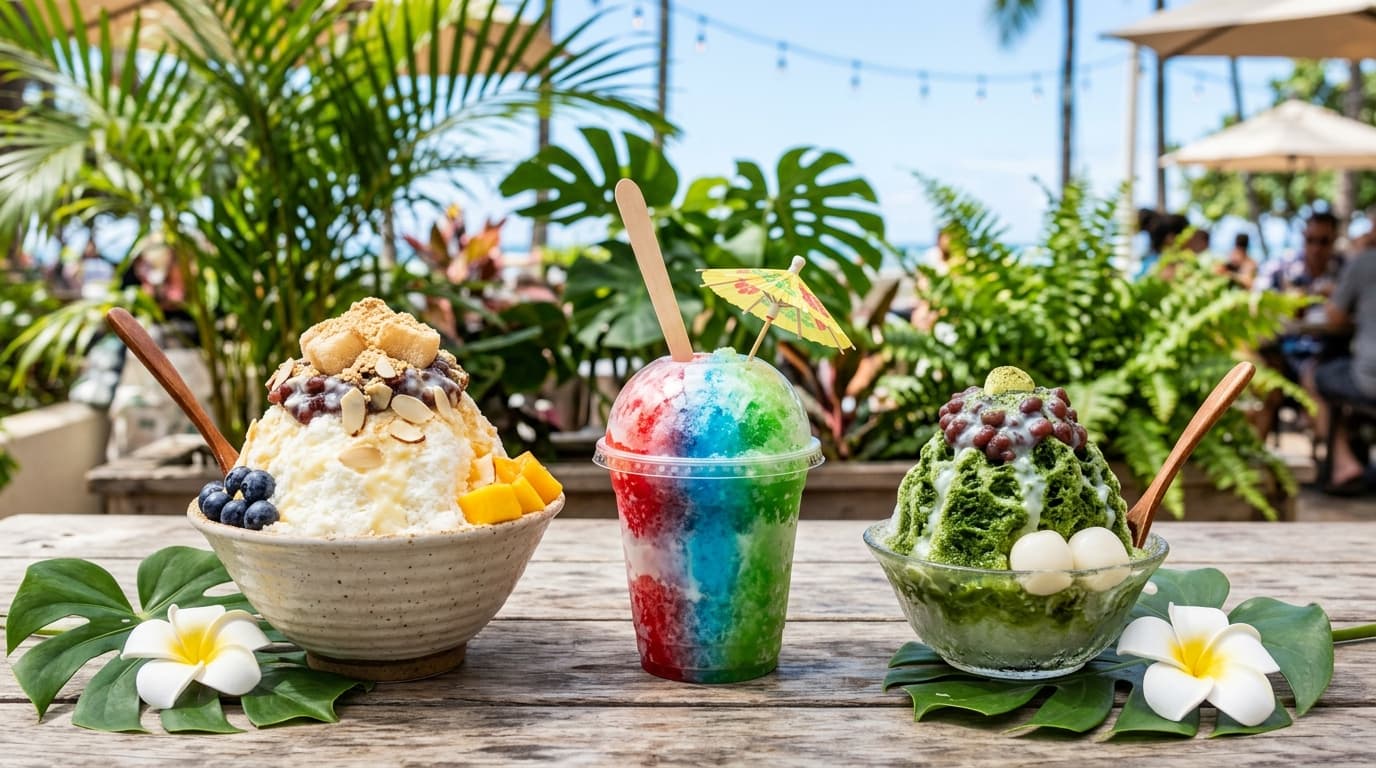
All three are shaved-ice desserts, but the ice is what sets them apart. Bingsu (Korean, 빙수) is fluffy shaved milk ice — creamy and snow-like, topped with red bean, fruit, and mochi. Hawaiian shave ice is finely shaved water ice soaked in fruit syrups (often with a snow cap and li hing). Japanese kakigori is fluffy water ice flavored with matcha or syrup. The key term people search for: "Korean shaved ice" is called bingsu (빙수).
A Short History of Three Iced Desserts
How Korea, Hawaii & Japan Each Made Ice Their Own
Bingsu has deep roots in Korea. During the Joseon Dynasty (1392–1897), ice harvested in winter was stored in royal ice houses called binggo (빙고). The earliest version simply paired shaved ice with sweet red bean (pat, 팥), giving rise to patbingsu (팥빙수). Over the 20th century the ice itself evolved from coarse blocks into ultra-fine shaved milk ice — the creamy, snow-like texture that defines modern bingsu.
Hawaiian shave ice traces back to the Japanese plantation immigrants who arrived in the islands in the late 1800s. They brought their tradition of kakigori — shaved ice with syrup — and adapted it using the tools they had, shaving blocks of ice with knives and sword-like blades. Over time this became the rainbow-colored, fruit-syrup shave ice that is now a Hawaiian icon, finished with a "snow cap" of condensed milk and a dusting of salty-sweet li hing.
Japanese kakigori (かき氷) is the oldest of the three, with references dating back to the Heian period (794–1185), when shaved ice was a rare luxury flavored with sweet vine syrup. Today kakigori is a beloved summer staple, served fluffy and light with flavors like matcha, strawberry, and condensed milk — and often topped with azuki red beans or mochi.
So the three desserts share an ancestor — shaved ice — but diverged based on what each culture had on hand. Hawaii and Japan stayed with water ice and bright syrups. Korea took a different path, freezing milk into the ice itself to create a richer, creamier dessert. That single choice is the biggest reason bingsu tastes nothing like a snow cone.
Bingsu vs Shaved Ice vs Kakigori
The Differences at a Glance
They all start with shaved ice, but the base, texture, and toppings tell three very different stories. Here is how they compare side by side:
| Feature | Bingsu (Korea) | Shaved Ice (Hawaii) | Kakigori (Japan) |
|---|---|---|---|
| Ice Base | Frozen milk ice | Water ice + fruit syrup | Water ice + syrup |
| Texture | Fluffy snow, creamy | Fine and icy | Fluffy and light |
| Toppings | Red bean, mochi, fruit, condensed milk | Fruit syrup, snow cap, li hing | Matcha, azuki, condensed milk |
| Sweetness Source | Sweet milk + toppings | Poured fruit syrups | Poured syrup + condensed milk |
| Served | Big bowl, made for sharing | Cup or cone, one person | Individual bowl |
| Origin | Korea (Joseon Dynasty) | Hawaii (plantation era) | Japan (Heian period) |
The single biggest difference: bingsu is built on frozen milk, while Hawaiian shave ice and Japanese kakigori are built on frozen water. That is why bingsu is creamy and rich, while the other two are crisp and refreshing.
Which Iced Dessert Should You Get?
A Quick Guide to Choosing Your Perfect Bowl
Get Bingsu
creamy milk-snow
Choose bingsu if you want a creamy, milky, snow-like dessert that eats more like ice cream than a snow cone. The shaved milk ice melts softly on your tongue, and toppings like red bean, fresh fruit, mochi, and condensed milk make every spoonful rich and satisfying.
Get Hawaiian Shave Ice
classic rainbow
Choose Hawaiian shave ice for the classic island experience — finely shaved water ice soaked in bright rainbow fruit syrups, often finished with a "snow cap" of condensed milk and a sprinkle of salty-sweet li hing. Crisp, colorful, and nostalgic.
Get Kakigori
light + matcha
Choose Japanese kakigori if you want something light and fluffy with refined flavors like matcha green tea, strawberry, or condensed milk. It is airy and refreshing rather than rich — a clean, palate-cooling treat on a hot day.
Bingsu for Sharing
best for groups
Bingsu is traditionally served in an oversized bowl meant for two or three people. If you are with friends or family and want one shareable, photo-worthy dessert that everyone digs into together, bingsu is the easy winner.
Bingsu in Waikiki
try it here
Want to taste real Korean bingsu near the beach? Kona Coffee Donut? on Kalākaua Avenue serves authentic shaved-milk bingsu — plus 100% Kona coffee and fresh mochi donuts — about a 5-minute walk from Waikiki Beach.
Why Try Korean Bingsu in Waikiki
Creamy Milk-Snow You Cannot Get From Shave Ice
Hawaiian shave ice and Japanese kakigori are made from water ice. Bingsu is made from frozen milk, so it has a creamy, snow-like texture that melts softly on your tongue — something the water-ice desserts simply cannot replicate. If you have only ever had shave ice, real bingsu is a completely different experience.
Hawaiian-Fruit Bingsu Flavors
In Waikiki you can enjoy bingsu topped with island-inspired tropical fruit. It blends the creamy Korean milk-snow base with the bright fruit flavors Hawaii is famous for — the best of both worlds in one bowl.
Pairs With 100% Kona Coffee
Cold, creamy bingsu next to a rich cup of 100% Kona coffee is a pairing you will not find at a typical shave ice stand. The sweet, icy dessert and the smooth Hawaiian-grown coffee balance each other perfectly.
About 5 Minutes From Waikiki Beach
You do not have to travel far for authentic Korean bingsu. Kona Coffee Donut? sits right on Kalākaua Avenue, roughly a 5-minute walk from Waikiki Beach — easy to reach before or after a day in the sun.
Where to Get Korean Bingsu in Waikiki
If this comparison left you craving the real thing, here is where to try authentic Korean bingsu in Waikiki.
Kona Coffee Donut?
2142 Kalakaua Ave, Honolulu, HI 96815
Right on Kalākaua Avenue in the heart of Waikiki, Kona Coffee Donut? serves authentic Korean bingsu made with creamy shaved-milk ice — not water ice. We also pour 100% Kona coffee and make fresh mochi donuts, and we are about a 5-minute walk from Waikiki Beach. Open daily, 7AM–9PM.
- Authentic Korean shaved-milk bingsu (not water ice)
- Paired perfectly with 100% Kona coffee
- About a 5-minute walk from Waikiki Beach
- Open daily, 7AM–9PM
How to Enjoy Bingsu
Get the Most Out of Every Bowl
Eat Fast Before It Melts
Shaved milk ice starts melting the moment it is served. Snap your photo quickly, then dig in while the ice is still fluffy and snow-like. The texture is the whole point — do not let it turn into a milky soup.
Mix the Toppings In
Do not just eat from the top down. Use your spoon to gently fold the red bean, fruit, mochi, and condensed milk into the ice as you go, so every bite has a balanced mix of creamy ice and toppings.
Share It
Bingsu is traditionally served in a big bowl made for two or three people. Gather around with spoons and enjoy it together — it is as much a social moment as a dessert.
Pair It With Kona Coffee
A cup of 100% Kona coffee alongside your bingsu is the perfect Waikiki combination. The smooth, rich coffee balances the cold, sweet milk-snow beautifully.
Frequently Asked Questions
What is the difference between bingsu and shaved ice?
What is Korean shaved ice called?
Is bingsu the same as kakigori?
What does "bingsu" mean?
Where can I get Korean bingsu in Waikiki?
Try Real Korean Bingsu in Waikiki
Now that you know the difference, taste it for yourself. Visit Kona Coffee Donut? at 2142 Kalakaua Ave for authentic creamy bingsu paired with 100% Kona coffee.