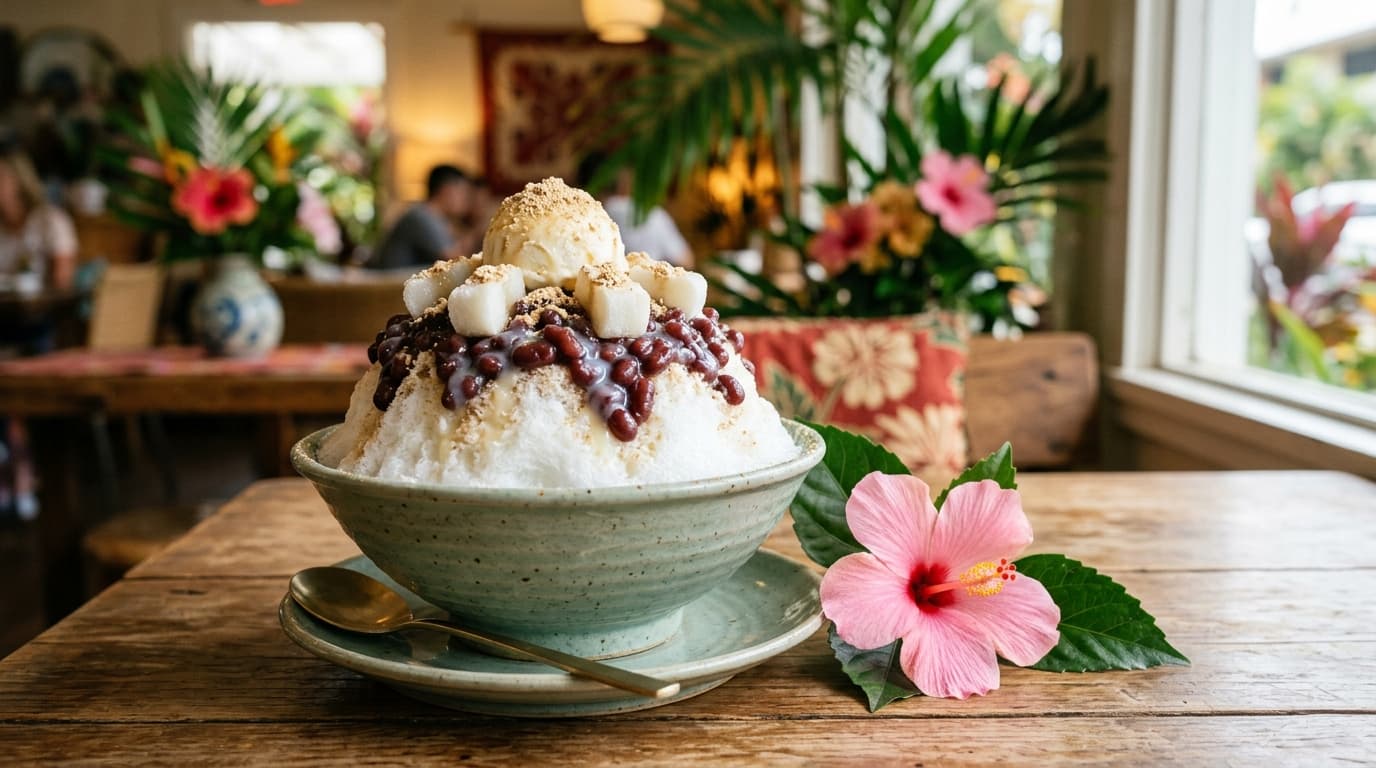
Bingsu Origin & History
Where Korean Shaved Ice Came From — From Joseon Royal Ice to a National Dessert
Where Did Bingsu Come From?
Bingsu (빙수) originated in Korea. The name literally means "ice water" (氷水), or finely shaved ice. Its original form is patbingsu (팥빙수) — shaved ice topped with sweet red beans. Bingsu evolved from a royal Joseon-era ice luxury, once reserved for kings, into Korea's national summer dessert enjoyed by millions today and now served worldwide, including Waikiki.
The History of Bingsu
From Joseon Dynasty Ice Houses to a Global K-Dessert
Bingsu's story begins in Korea's Joseon Dynasty (1392–1897), when ice was a royal luxury — not a dessert anyone could buy. The court operated dedicated ice houses called 빙고 (binggo), built along the Han River to harvest natural block ice in winter and preserve it through the heat of summer. Two of the most important, Seobinggo (서빙고) and Dongbinggo (동빙고), were so central to royal life that their names survive today as Seoul neighborhood and place names. Receiving a share of this ice was a privilege handed out by the king himself.
The earliest true bingsu was simple: shaved ice topped with sweet red bean paste (pat, 팥). That humble pairing gave the dessert its enduring name, patbingsu (팥빙수) — literally "red bean shaved ice." As ice slowly became more accessible beyond the palace, patbingsu spread from a royal indulgence toward something ordinary people could finally taste.
During the Japanese colonial period (1910–1945), hand-cranked ice shavers arrived and patbingsu moved onto the streets. Vendors sold coarsely shaved ice topped with red bean and chewy rice cake (tteok) from stalls and small shops, and through the mid-20th century bingsu became Korea's familiar, affordable summer treat — a cooling reward on a hot afternoon.
The real transformation came in the 1980s and 1990s. Korean cafés swapped coarse water ice for ultra-fine milk snow and piled on premium toppings — fresh fruit, injeolmi (soybean-powder rice cake), Oreo, cheesecake. Franchises like Sulbing (설빙) turned bingsu into a year-round café phenomenon, and the global Korean Wave (Hallyu) carried it far beyond Korea — to Japan, China, Southeast Asia, and across the Pacific to Hawaii and Waikiki, where it thrives today.
How Bingsu Evolved Over Time
Six Centuries, One Dessert
Bingsu didn't appear overnight. It transformed across centuries — from a guarded royal luxury to the milk-snow dessert you can order in Waikiki today. Here's how it changed:
| Era | What bingsu was | Ice type | Toppings |
|---|---|---|---|
| Joseon Dynasty | A royal ice treat for kings and nobles | Natural block ice from binggo | Minimal — ice as the luxury itself |
| Early 1900s | Patbingsu sold as street food | Coarsely hand-shaved ice | Sweet red bean (pat) |
| Mid-1900s | A popular, affordable summer treat | Machine-shaved ice | Red bean + chewy rice cake (tteok) |
| 1980s–90s | The café bingsu boom begins | Fine milk ice | Fruit, injeolmi, Oreo, condensed milk |
| 2010s | Premium franchise dessert | Ultra-fine milk snow | Endless — fruit, matcha, cheesecake & more |
| Today | A global K-dessert, including Waikiki | Milk snow | Creative, seasonal & tropical |
The through-line is the ice itself: bingsu went from precious natural block ice to fluffy milk snow, while the toppings grew richer at every step — yet patbingsu, the original red-bean form, has never gone out of style.
Classic Bingsu Types Born From This History
The Varieties That Grew Out of Patbingsu
Patbingsu (The Original Red Bean)
팥빙수
The one that started it all. Finely shaved milk ice crowned with sweet red beans (pat), chewy rice cake (tteok), and a drizzle of condensed milk. Every other bingsu is a descendant of this Joseon-rooted classic — comforting, nostalgic, and still the benchmark.
Injeolmi Bingsu
인절미빙수
Named after injeolmi, the soft rice cake dusted in roasted soybean powder (konggomul). Cubes of chewy injeolmi, a nutty blanket of soybean powder, and condensed milk turn shaved ice into something earthy and deeply traditional — a modern café favorite with old-Korea roots.
Fruit / Mango Bingsu
과일빙수
The fresh, summery evolution — seasonal fruit piled high on milk snow. Mango bingsu is the global star, joined by strawberry, watermelon, and mixed tropical fruit. This is the bingsu that made the dessert Instagram-famous worldwide.
Oreo / Chocolate Bingsu
오레오빙수 / 초코빙수
The café-era indulgence: crushed Oreos, chocolate syrup, brownie pieces, and chocolate ice cream layered over milk ice. A child of the 1990s topping revolution, it remains a favorite of younger generations who love rich, decadent flavor.
Matcha (Green Tea) Bingsu
녹차빙수
A pan-Asian fusion that exploded with the premium café wave. Green tea powder is folded into or dusted over the snow, balanced with red bean and mochi. Its gentle bitterness cuts the sweetness — proof of how far bingsu has traveled from its red-bean origins.
From Joseon Ice Houses to Waikiki
Centuries of Korean Heritage in Every Bowl
When you eat bingsu in Waikiki, you're tasting six centuries of Korean history — from royal binggo ice houses to street-stall patbingsu to the milk-snow dessert in front of you. Few desserts carry this much story in a single bowl.
The Hallyu Wave Brought Bingsu Worldwide
The global Korean Wave (Hallyu) — K-pop, K-dramas, K-food — carried bingsu out of Korea and across the Pacific. Visitors from Japan, China, and across Asia arrive in Hawaii already knowing and craving it, making Waikiki a natural home for authentic bingsu.
Hawaii's Own Shave-Ice Love Makes It a Natural Fit
Hawaii already treasures shave ice as a local icon, so the islands instantly understand bingsu. Korea's milk-snow version simply elevates a beloved local concept with creamier ice, premium toppings, and a shareable bowl — a perfect cultural match.
Try Authentic Bingsu Fresh in Waikiki
History tastes best in person. You don't have to fly to Seoul to experience the real thing — authentic Korean bingsu, made with fine milk ice and fresh toppings, is waiting just minutes from Waikiki Beach.
Where to Taste This History in Waikiki
You can taste the end of this 600-year story right in Waikiki — at Kona Coffee Donut?.
Kona Coffee Donut?
2142 Kalakaua Ave, Honolulu, HI 96815
On Kalākaua Avenue in the heart of Waikiki, Kona Coffee Donut? serves authentic Korean bingsu alongside 100% Kona coffee. We pair the dessert's centuries of Korean heritage with the best of Hawaii — fine milk snow, fresh toppings, and rich island coffee in one stop.
- Authentic Korean bingsu, from classic patbingsu to fruit
- Paired with 100% Kona coffee — Hawaii meets Korea
- About 5 minutes from Waikiki Beach
- Open daily 7AM–9PM — perfect any time of day
How to Enjoy Authentic Bingsu
Taste It the Way Koreans Have for Generations
Start With Classic Patbingsu
To understand bingsu's history, begin where it began. Classic patbingsu — milk snow, sweet red bean, chewy rice cake, condensed milk — is the original blueprint every other flavor is built on. Try it first, then branch out.
Eat It Before It Melts
Fine milk snow starts melting the moment it's served. Snap your photo fast, then dig in while the ice is still fluffy and cloud-like. The texture — not just the toppings — is the whole point.
Mix the Toppings In
Don't eat straight down from the top. Gently fold the red bean, fruit, and condensed milk through the ice so every spoonful is balanced. The flavors were always meant to come together, not be eaten in layers.
Share It — and Pair It With Kona Coffee
Bingsu has always been a shared dessert in Korea; one big bowl is made for 2–3 people and a few spoons. In Waikiki, pair that shared bowl with a cup of 100% Kona coffee for the perfect Hawaii-meets-Korea finish.
Bingsu Origin & History FAQ
Where did bingsu come from?
What does "bingsu" mean?
Who invented bingsu and how old is it?
What was the original bingsu?
Where can I try authentic bingsu in Waikiki?
Taste 600 Years of History in Waikiki
Visit Kona Coffee Donut? at 2142 Kalakaua Ave and experience authentic Korean bingsu — the dessert that traveled from Joseon ice houses to Waikiki — paired with 100% Kona coffee.