Best Poke in Waikiki (2026): Where Locals Actually Buy It
Real Hawaiian poke is sold by the pound at fish counters, not assembled from a topping bar. Here is where to get it in and around Waikīkī, how to order, and what to do about dessert.
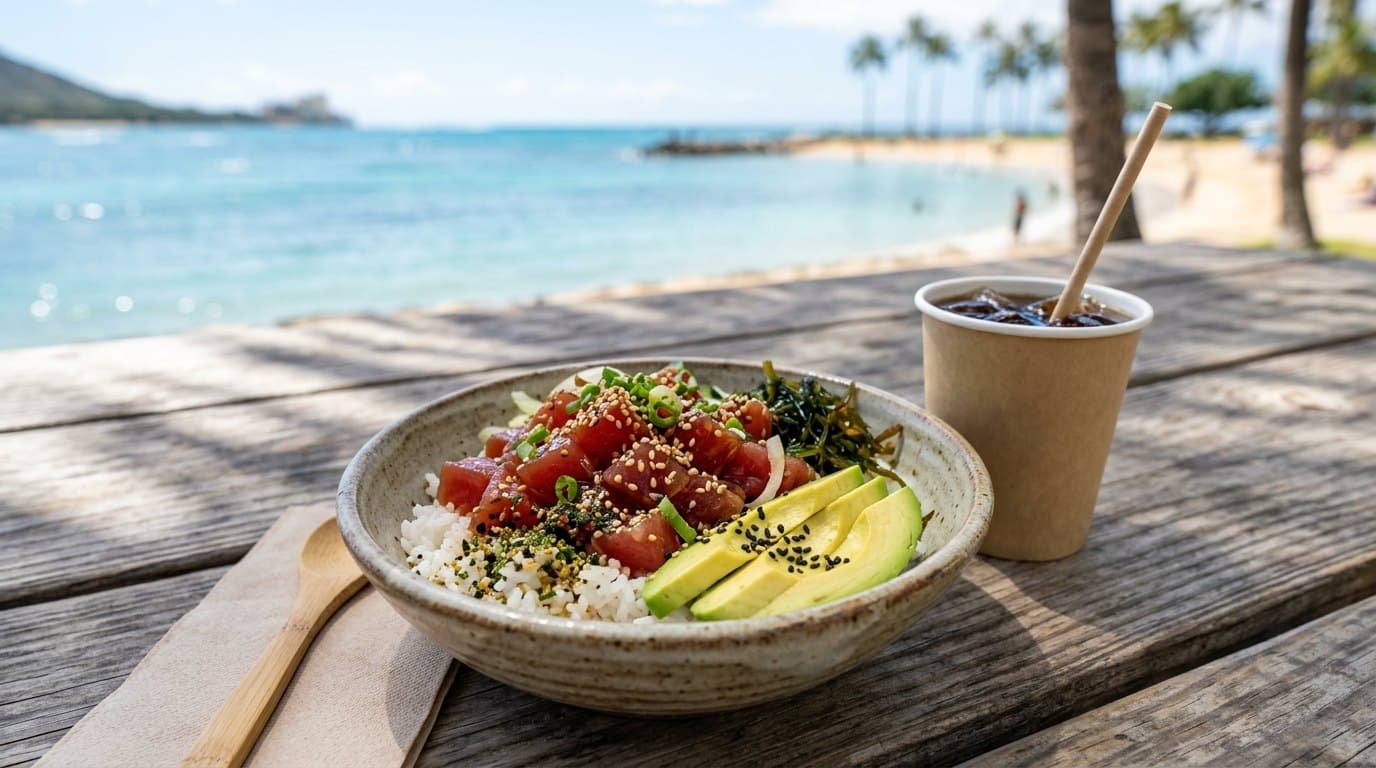
Poke (POH-keh, "to cut crosswise") is Hawaiʻi's everyday raw-fish dish: cubed ahi tuna dressed with Hawaiian sea salt, limu (seaweed), sweet Maui onion and, since the plantation era, shoyu and sesame oil. It predates the mainland "poke bowl" chains by a century and tastes nothing like them. In Waikīkī the best poke is not in the tourist restaurants — it is at a handful of fish counters and take-out windows, most of them on the Kapahulu side or a short bus ride toward Ala Moana. This guide lists the places locals actually use, explains the varieties so you can order without guessing, and gives you a realistic price range. We are a doughnut and coffee shop, not a poke shop — but we are two blocks from the beach where you will eat it, and we are where people come for dessert after.
After the Poke: Dessert on Kalākaua
Kona Coffee Donut at 2142 Kalākaua Ave — mochi donuts, malasadas, mango or Kona coffee bingsu and 100% Kona cold brew, fresh daily, 7 AM–9 PM. The natural second stop after a poke bowl on the beach.
What "Real" Poke Is (and What It Isn't)
Traditional Hawaiian poke has three things: fresh raw fish cut into cubes, Hawaiian salt, and limu. Sweet onion, green onion, inamona (roasted kukui nut) and chili are the classic additions; shoyu and sesame oil came with Japanese plantation workers and are now standard. It is a side dish or a pūpū — eaten with rice, over rice, or straight from the container with a fork on a tailgate. A mainland "poke bowl" with mango, edamame, crispy onions and Sriracha mayo is a sushi-adjacent salad; it is fine, but it is not what this guide is about.
- •Shoyu ahi — the default: ahi, shoyu, sesame oil, onion, green onion. Order this first.
- •Limu ahi — closest to the pre-contact original: salt, limu, inamona, no shoyu. Briny and clean.
- •Spicy ahi — ahi bound with a spicy mayo. The most popular with visitors.
- •Hawaiian-style — salt, chili pepper water, inamona, limu. Hotter and saltier than shoyu.
- •Tako (octopus), salmon, and hamachi rotate in at most counters; ahi is the benchmark.
Best Poke Spots in Waikīkī (Walkable)
Inside Waikīkī proper the choices are fewer than you would expect, because the good poke is sold from counters that do not have dining rooms. These are the ones worth walking to.
- •Maguro Brothers — Japanese-run fish counter with a Waikīkī evening location on Kūhiō Ave. Poke bowls and chirashi made from the same fish they sell at their Chinatown market by day. The most consistent bowl inside Waikīkī.
- •Ono Seafood (Kapahulu Ave, 12-min walk from east Waikīkī) — a take-out counter that has been a locals' favorite for decades. Shoyu ahi and spicy ahi bowls, made when you order. Cash-friendly, lines at lunch.
- •Da Hawaiian Poke Company (Kūhiō Ave area) — a Waikīkī-side option with several fish varieties and standard-sized bowls; good when you don't want to leave the neighborhood.
- •Grocery counters — Foodland Farms at Ala Moana Center and the Waikīkī-side Food Pantry sell poke by the pound from a chilled case. Foodland's poke is a genuine local institution; ask for a "poke bowl" and they will scoop it over rice.
Worth the Short Trip: Kapahulu & Ala Moana
Kapahulu Ave, which runs inland from the Honolulu Zoo, is where Waikīkī locals eat. Ono Seafood is the poke stop; Rainbow Drive-In and Leonard's are on the same street for plate lunch and malasadas. Toward Ala Moana, the Foodland Farms counter and the food-court poke stalls are a 10-minute bus ride on Route 8, 20 or 23 from Kūhiō Ave. If you have a car, Tamashiro Market (Kalihi) and the Chinatown fish markets are where restaurants source their ahi — worth it if you want to see poke sold the old way.
- •Kapahulu Ave: Ono Seafood, plus Rainbow Drive-In & Leonard's next door
- •Ala Moana: Foodland Farms poke counter, food-court poke stalls (10 min by bus)
- •Chinatown / Kalihi: Maguro Brothers (daytime), Tamashiro Market — with a car
How to Order Poke Like a Local
Counters sell poke by weight: a quarter pound is a snack, a half pound is a meal, a pound feeds three. Ask for it "over rice" to make it a bowl, or "on the side" to eat with chopsticks. Check the case for fish that looks translucent and deep red, not brown or grey at the edges. Ask what came in today — counters that sell a lot of poke will tell you. Skip the toppings bar if there is one; good ahi does not need crispy onions.
- •¼ lb snack · ½ lb meal · 1 lb feeds three
- •"Over rice" = bowl; "on the side" = pūpū
- •Look for translucent deep-red ahi with no grey edges
- •Ask "what came in today?" — the honest answer tells you what to order
What Poke Should Cost in Waikīkī
Fresh ahi is not cheap, and 2026 prices reflect it: expect $14–20 for a standard bowl and $18–26 per pound at a counter. Anything under $12 for an ahi bowl in Waikīkī is usually previously frozen fish or a small portion; anything over $28 for a standard bowl is a hotel markup. Grocery counters are the best value per ounce; evening counters like Maguro Brothers are the best quality per dollar.
Poke + Dessert: The Waikīkī Afternoon
The classic local sequence is poke on the beach, then something cold and sweet. Two blocks from Kūhiō Beach on Kalākaua Ave, Kona Coffee Donut does the second half: mango, strawberry or Kona coffee bingsu (milk shaved ice, shareable), fresh malasadas, a box of mochi donuts for the room, or a 100% Kona cold brew to walk with. It is open until 9 PM, so it also works after an evening poke bowl from Maguro Brothers.
Keep Reading
Frequently Asked Questions
Poke on the Beach, Dessert on Kalākaua
Bingsu, malasadas, mochi donuts and 100% Kona coffee — the second stop after your poke bowl. Two blocks from the beach.